
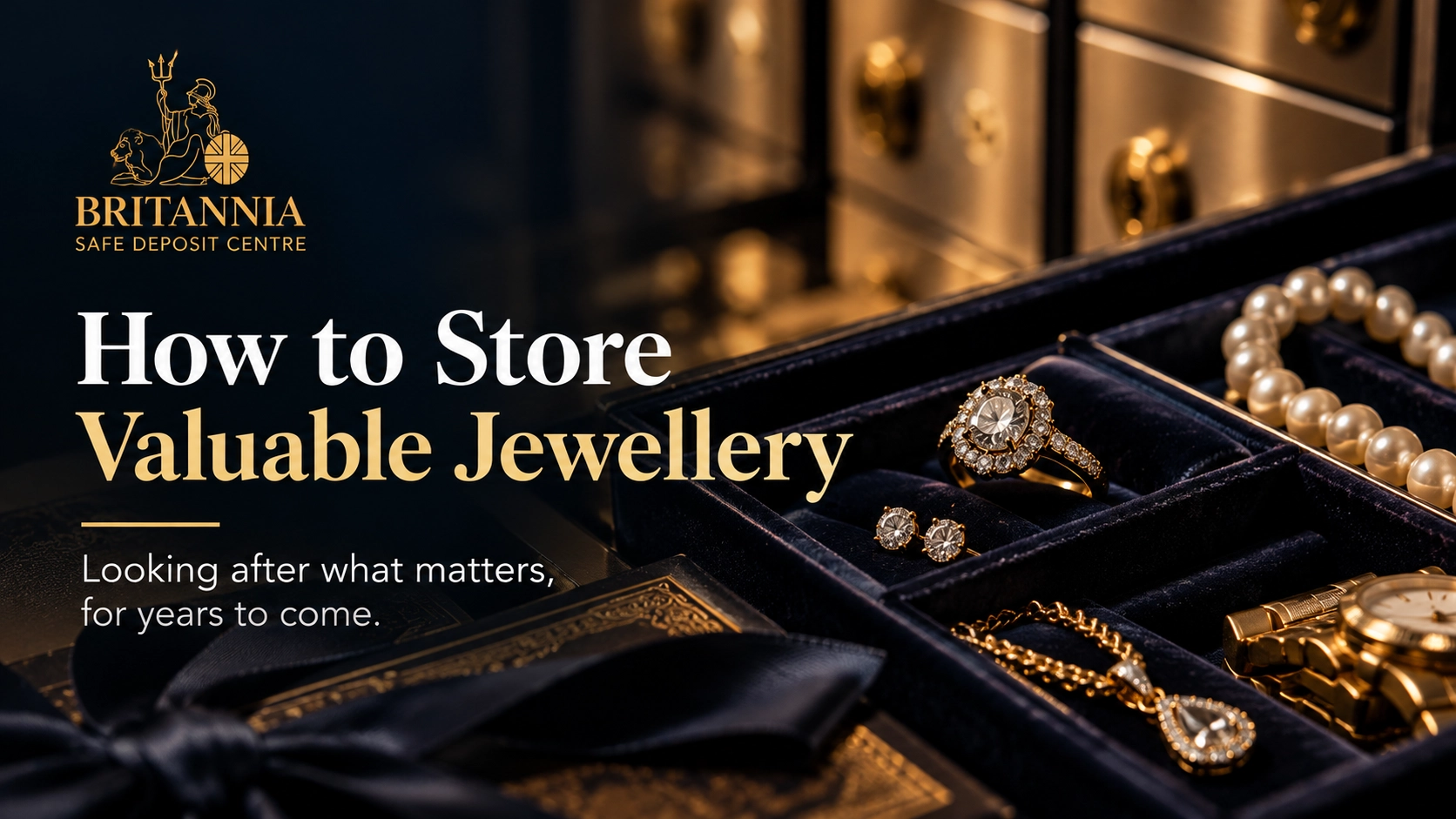
Some pieces of jewellery are worn every day. Others spend most of their time carefully tucked away, brought out only for special occasions or passed down through generations.
An engagement ring, an inherited necklace or a watch received as a gift can carry memories that are just as important as its monetary value.
But when jewellery is stored for months or even years, it’s worth thinking about more than simply finding somewhere to put it.
Different materials need different care, certain pieces can become damaged when stored together, and the location you choose can make a difference to how practical your storage arrangements are.
Whether you’re looking after a growing collection or preserving a single treasured piece, here are some useful things to consider when storing valuable jewellery for the long term.
1. Store jewellery separately to prevent unnecessary damage
One of the simplest ways to look after jewellery is to avoid storing everything together.
Precious metals, gemstones and delicate settings can react differently to everyday contact and movement.
For example, diamonds are extremely hard and can scratch other gemstones or jewellery surfaces. Gold, particularly higher-carat gold, can also be relatively soft and susceptible to scratches.
Keeping individual pieces separated helps reduce unnecessary contact.
Consider using:
- Individual soft-lined jewellery compartments
- Suitable fabric pouches for individual pieces
- Protective cases for rings, earrings and pendants
- Dividers to prevent necklaces and bracelets becoming tangled
For valuable or delicate jewellery, retaining its original presentation box may be useful, provided the materials are suitable for long-term storage.
The aim is simple: each piece should have its own space rather than being left in contact with other items.
2. Think about moisture, temperature and light
Jewellery may look durable, but certain materials can be sensitive to their surroundings.
Excess moisture can contribute to tarnishing or deterioration of some metals and components, while unsuitable heat or prolonged exposure to direct sunlight may affect particular gemstones and organic materials.
Pearls, opals and other delicate materials can require more specific care than traditional gold or platinum jewellery.
For long-term storage, consider keeping jewellery in a stable indoor environment, away from direct sunlight, excessive heat and damp conditions.
Avoid assuming that an airtight container or moisture-absorbing product is suitable for every type of jewellery. Some materials, including pearls and opals, may be adversely affected by excessively dry conditions.
If you’re unsure about a particular gemstone or antique piece, a qualified jeweller can advise on appropriate storage conditions.
3. Clean jewellery appropriately before putting it away
Jewellery can accumulate oils, cosmetics, perfume residue and everyday dirt during use.
Before placing something into long-term storage, it may be worth having it cleaned using a method suitable for its materials.
However, not all jewellery should be cleaned in the same way.
Certain gemstones, treated stones, antique settings and delicate pieces can be damaged by unsuitable cleaning products or ultrasonic equipment.
For particularly valuable or sentimental items, professional advice is preferable to experimenting with household cleaning methods.
Once cleaned, ensure the piece is appropriately dry before storing it, unless its specific material requires different care.
4. Keep records of valuable jewellery
When considering how to store valuable jewellery, the jewellery itself is only part of the picture.
It’s also worth maintaining accurate records of what you own.
Depending on the piece, useful information might include:
- Photographs showing the item and any identifying features
- Purchase receipts or other proof of ownership
- Professional valuations
- Gemstone certificates, where applicable
- Details of any repairs, alterations or servicing
- Relevant insurance documentation
These records can be helpful for valuations, estate planning, insurance enquiries and passing possessions between generations.
For particularly valuable collections, consider maintaining a separate digital copy of relevant documents.
It’s also worth reviewing valuations periodically, particularly where the value of an item may have changed.
5. Consider how often you actually wear each piece
Not all jewellery needs to be stored in the same place.
A wedding ring worn every day has very different practical requirements from an inherited necklace that is only worn occasionally.
It can help to divide a collection into two groups.
Jewellery you wear regularly
Frequently worn pieces may need to remain readily accessible.
Suitable home storage, careful handling and appropriate maintenance can all form part of looking after these items.
Jewellery you rarely wear
Other pieces may spend years between occasions.
Family heirlooms, inherited jewellery, special-occasion pieces and parts of a collection may not need to remain at home throughout that time.
For these items, it’s worth considering whether a separate storage location would better suit your circumstances.
This is one of the questions we explored in our article, Home Safe vs Safe Deposit Box: What’s the Difference?
6. Think beyond the financial value
Some jewellery is valuable because of its materials, craftsmanship or rarity.
Other pieces may have relatively modest financial value but enormous personal significance.
A grandmother’s wedding ring, a necklace handed down through the family or a piece purchased to mark an important occasion may be impossible to replace in any meaningful sense.
When deciding where to store jewellery, it’s worth asking yourself:
If this piece were lost or damaged, could it genuinely be replaced?
That question can sometimes be more important than its estimated resale value.
We’ve explored this distinction further in 5 Things People Commonly Store in a Safe Deposit Box.
7. Consider storing valuable jewellery away from home
For jewellery that is worn infrequently, keeping it at a separate location may be worth considering.
A home jewellery box or safe offers convenience, but it also means the items remain at your home address.
A safe deposit box provides another option for suitable physical possessions that don’t need to be accessed every day.
At Britannia Safe Deposit Centre, customers can choose from a range of safe deposit box sizes, depending on their storage requirements.
This may be worth exploring for items such as inherited jewellery, valuable watches, family heirlooms and special-occasion pieces.
It’s important to remember that a safe deposit box is a storage arrangement, not a replacement for appropriate jewellery packaging, specialist conservation advice or suitable insurance.
If you’re unfamiliar with the process, our guide What Is a Safe Deposit Box and How Does It Work? explains more.
8. Review your jewellery storage arrangements occasionally
Jewellery collections can change considerably over time.
You might inherit new pieces, purchase something valuable or discover jewellery that has been stored away for years.
A periodic review gives you an opportunity to check the condition of individual items, update relevant records and reconsider whether your existing storage arrangements still make sense.
It’s also worth reviewing any insurance arrangements to understand what is covered, where items may be kept and whether any specific conditions apply.
The best long-term approach is one that reflects both the jewellery you own and how you intend to use it.
Looking after what matters at Britannia
Valuable jewellery deserves careful consideration, particularly when it has been collected, inherited or preserved over many years.
Choosing suitable packaging, understanding the needs of different materials and maintaining accurate records can all help you look after your possessions.
For items that don’t need to remain at home, a safe deposit box may provide a practical additional storage option.
Britannia Safe Deposit Centre offers a range of safe deposit box sizes, and the team can discuss the available options with you.
Contact Britannia Safe Deposit Centre to arrange a private appointment.
Frequently asked questions
What is the best way to store valuable jewellery long term?
The best approach depends on the materials and construction of each piece. In general, jewellery should be kept separately in suitable protective packaging, in an environment appropriate to its materials. Particularly valuable or delicate items may benefit from specialist advice.
Should jewellery be stored in plastic bags?
Not all plastic bags are suitable for long-term jewellery storage. Some materials can trap moisture or contain substances that may affect certain metals or gemstones. Use storage materials recommended for the specific item.
Can gold jewellery tarnish in storage?
Pure gold is highly resistant to tarnishing, but gold alloys contain other metals that may react with environmental conditions. Appropriate cleaning and storage can help maintain the appearance of gold jewellery.
Should valuable jewellery be kept at home?
That depends on how frequently you wear it, your storage arrangements and your personal preferences. Frequently worn jewellery may be more convenient to keep at home, while valuable pieces used only occasionally may be suitable for separate storage.
Can you store jewellery in a safe deposit box?
Jewellery is among the types of possessions people may choose to store in a safe deposit box. Britannia offers different box sizes, and customers can contact the team to discuss their requirements and confirm whether particular items are suitable.
Should jewellery be insured if it’s kept in a safe deposit box?
A safe deposit box should not automatically be assumed to provide insurance for its contents. Check the facility’s applicable terms and any insurance arrangements to understand what protection is available and whether separate cover is appropriate.
Related reading
Home Safe vs Safe Deposit Box: What’s the Difference?
Ready to protect what matters?
Speak to the Britannia team about your requirements and find the right safe deposit box for the things that matter to you.
Arrange a Private Visit →